

Why Mechanical Infrastructure Is Becoming the Next Billion-Dollar Opportunity
By Victor J. Hernandez, CIPE, CPD, CNE
Millions of apartment buildings, condominiums, schools, churches, offices, and commercial properties are supported by plumbing and mechanical systems quietly reaching the end of their useful lives. Most owners don’t realize the problem until a leak, equipment failure, or insurance claim forces an emergency.
What most people don’t see is what lies behind the walls.
Domestic water piping.
Drainage systems.
Heating equipment.
Aging valves.
Corroded piping.
Obsolete controls.
These systems quietly age every day until one small leak becomes a major insurance claim—or worse, a catastrophic building failure. America’s Building Stock Is Growing Older
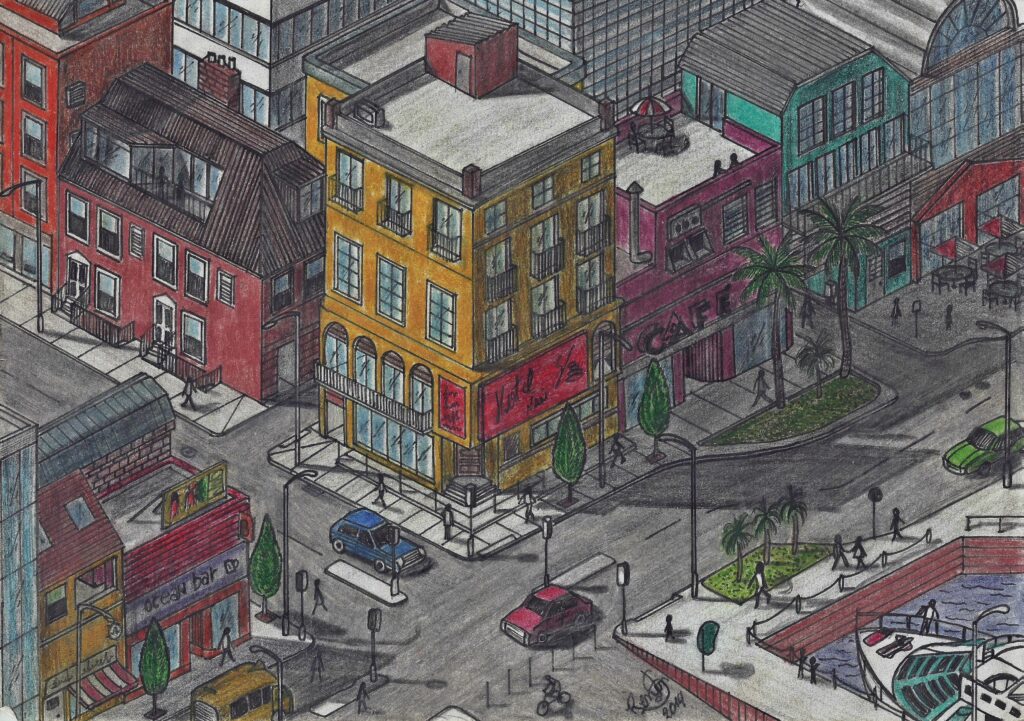
The United States has millions of apartment buildings, condominiums, hotels, schools, churches, office buildings, and municipal facilities built decades ago.
Many continue to perform structurally very well.
Their mechanical systems do not.
Unlike roofs or flooring, plumbing and mechanical infrastructure often remains hidden until problems become impossible to ignore.
Owners frequently react instead of planning.
The result is emergency repairs, displaced tenants, water damage, mold remediation, rising insurance premiums, and frustrated occupants.

The Cost of Waiting
Deferred maintenance rarely becomes less expensive.
A leaking domestic water line may seem like a small inconvenience today.
Tomorrow it may become:
- Multiple tenant relocations
- Structural drying
- Mold remediation
- Insurance deductibles
- Emergency demolition
- Unexpected permit requirements
- Escalating labor costs
Reactive maintenance is almost always the most expensive maintenance strategy.
Mechanical Systems Are Capital Assets
Property owners routinely budget for roofs, paving, windows, elevators, and exterior improvements.
Mechanical systems deserve the same long-term planning.
Every building should have a Mechanical Infrastructure Plan that identifies:
- Remaining service life
- Risk areas
- Replacement priorities
- Energy improvement opportunities
- Capital budgeting timelines
- Phased modernization strategies
This transforms unexpected emergencies into planned investments.
Modernization Doesn’t Mean Demolition
One of the biggest misconceptions in our industry is that aging buildings require complete replacement.
In many cases, the structure remains perfectly viable.
The mechanical infrastructure simply needs modernization.
Today’s technologies allow owners to upgrade:
- Domestic water systems
- Drain, waste, and vent piping
- Hydronic heating
- Domestic hot water generation
- Pumping systems
- Building controls
- Energy management
- Mechanical rooms
without replacing the building itself.
Prefabrication Changes Everything
Historically, mechanical renovations meant months of field fabrication inside occupied buildings.
Today’s prefabricated mechanical assemblies dramatically reduce on-site labor, improve quality control, and shorten installation schedules.
Factory-built systems also create greater consistency while minimizing disruption to occupants.
As labor shortages continue across North America, prefabrication is becoming less of an innovation and more of a necessity.
A New Way to Think About Existing Buildings
For decades, owners have viewed plumbing and mechanical work as unavoidable expenses.
We believe they should instead be viewed as strategic investments.
A well-planned modernization can:
- Extend building life by decades
- Reduce operating costs
- Improve tenant satisfaction
- Increase property value
- Lower long-term maintenance costs
- Support future energy initiatives
Mechanical infrastructure is no longer just about replacing old pipes.
It is about protecting one of an owner’s largest investments.
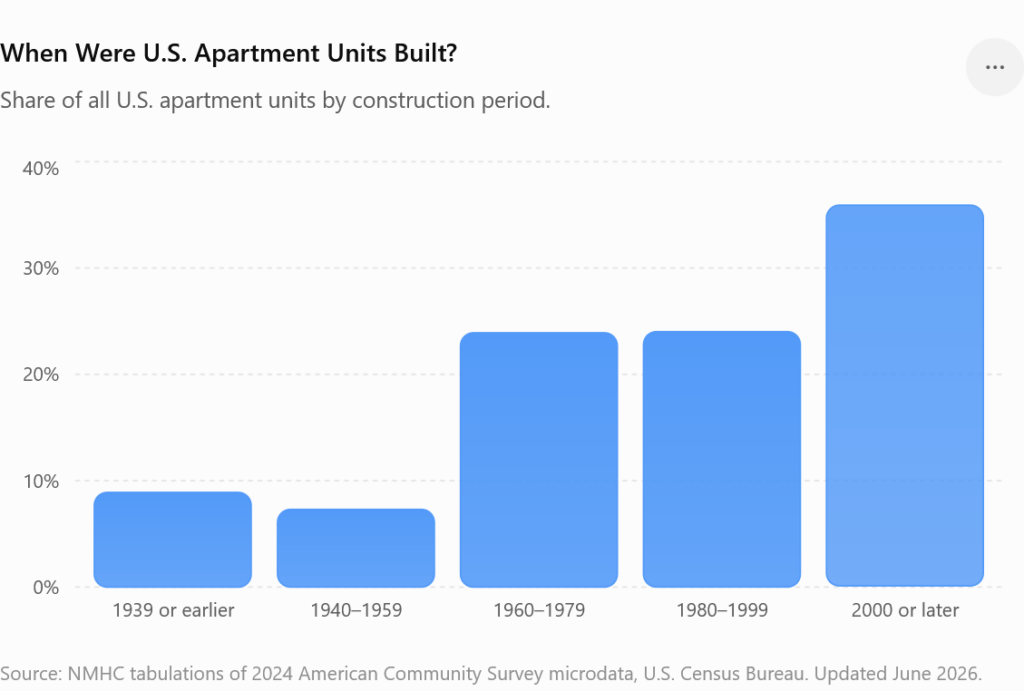
Nearly 40% of U.S. apartment units were built before 1980, meaning a large portion of the national apartment stock is now old enough to require serious plumbing, mechanical, and infrastructure planning. Source: NMHC tabulations of 2024 American Community Survey microdata, U.S. Census Bureau. Updated June 2026.
Looking Ahead
The next generation of building ownership will belong to organizations that manage mechanical infrastructure proactively instead of reactively.
Blueprint Mechanical Systems was founded on the belief that existing buildings deserve modern mechanical solutions—not temporary repairs.
As North America’s building stock continues to age, owners who invest in thoughtful modernization today will be far better positioned for tomorrow.

About the Author
Victor J. Hernandez, CIPE, CPD, CNE is the Founder of Blueprint Mechanical Systems and Victory Lane Holdings LLC. His career spans more than four decades across plumbing engineering, design-build construction, project management, commercial real estate, land development, and mechanical infrastructure planning.
Throughout his career, Victor has participated in projects ranging from high-rise mixed-use developments in Manhattan to residential, commercial, industrial, institutional, and multifamily projects throughout the Pacific Northwest. His experience extends well beyond mechanical systems to include project origination, feasibility analysis, entitlement coordination, permitting, negotiations with building departments and public agencies, development planning, construction management, and long-term property ownership strategies.
This broad perspective shapes the philosophy behind Blueprint Mechanical Systems. Rather than viewing plumbing and mechanical work as isolated construction activities, Victor approaches every project as part of a building’s complete life cycle—from the earliest concept and entitlement discussions through design, construction, operation, modernization, and long-term asset preservation.
His articles draw upon practical field experience, engineering principles, real estate economics, and decades of lessons learned to help owners make informed, pragmatic decisions that balance technical performance, constructability, operational efficiency, and long-term return on investment.
Victor believes that the most successful projects begin long before construction starts—with thoughtful planning, interdisciplinary collaboration, and a commitment to creating buildings that serve their owners and occupants for generations.
Blueprint Perspective
The greatest buildings are not defined by the year they were built—they’re defined by how intelligently they’re maintained and modernized.
— Victor J. Hernandez, CIPE, CPD, CNE

Final Thoughts
The greatest threats to a building are often the ones hidden behind finished walls, above suspended ceilings, and beneath concrete floors. Unlike a damaged roof or deteriorating façade, plumbing and mechanical infrastructure quietly ages out of sight—often for decades—until one unexpected failure brings years of deferred maintenance to the surface.
As owners and stewards of our buildings, we cannot protect what we choose not to examine. The question is not whether aging infrastructure will eventually demand attention, but whether we will address it proactively or react only after an emergency forces our hand.
At Blueprint Mechanical Systems, we believe every building deserves a long-term mechanical infrastructure strategy—one that balances engineering, economics, constructability, and ownership objectives. Thoughtful planning today not only reduces risk tomorrow, it helps preserve the value, safety, and longevity of the buildings entrusted to our care.
Because the most expensive infrastructure problem is often the one nobody saw coming.